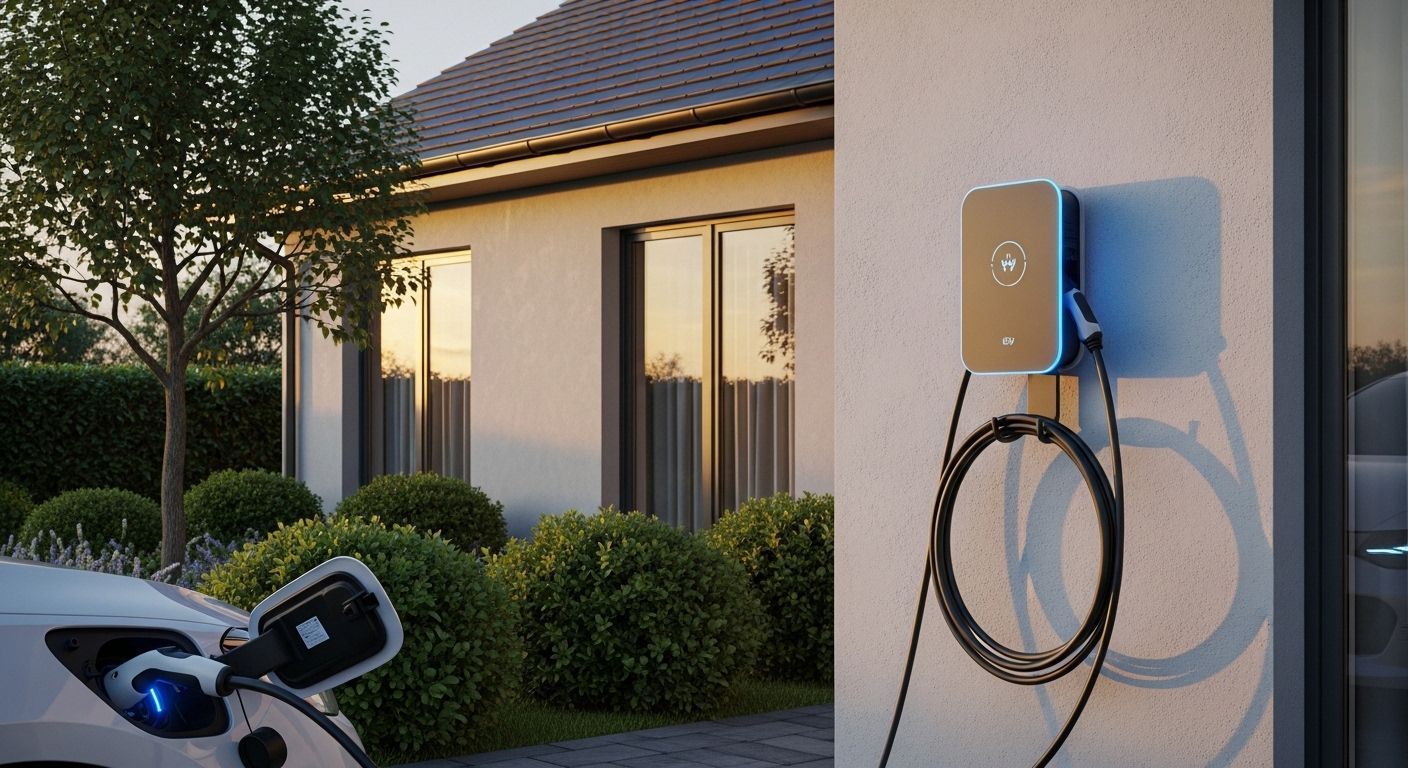
Level 2 charging is what most homeowners install for everyday convenience. This uses a dedicated 240-volt circuit, similar to what large appliances use. That’s where amperage starts to matter.
When people ask how many amps needed for home EV charger installations, they’re usually really asking how fast they want the car to charge. Higher amperage allows more power to flow to the vehicle, which reduces charging time.
A 30-amp charger is often enough for moderate daily driving. It can typically add around 20–25 miles of range per hour depending on the vehicle. For many households, that’s completely sufficient.
A 40-amp or 50-amp charger provides faster charging and gives more flexibility, especially for larger EV batteries or multiple drivers sharing one charger. These setups are common because they balance speed with reasonable installation costs.
Then there are ultra-high-powered home chargers that use 60 amps or more. Those can charge very quickly, but not every house can support them easily. Older electrical panels may require upgrades, and installation costs can rise quickly if new wiring or service capacity is needed.
One thing people often overlook is that the charger itself and the circuit breaker are not always rated the same. EV chargers are considered continuous loads, meaning they run for several hours at a time. Because of that, electrical code usually requires the circuit to be rated higher than the charger’s actual continuous output.
For example, a charger delivering 40 amps typically needs a 50-amp circuit. A charger delivering 48 amps usually requires a 60-amp circuit. That’s why electricians often start by evaluating the home’s electrical panel before recommending equipment.
The age of your home matters too. Newer homes are often better prepared for EV charging because they already have larger electrical service panels. Older homes sometimes need panel upgrades before a higher-powered charger can be installed safely.
Another thing worth considering is your actual driving routine. If you drive 30 or 40 miles a day, you probably don’t need the fastest charger available. Even a mid-range Level 2 charger can easily recover that overnight. But if you drive long distances regularly or own a large electric truck or SUV, faster charging may be more valuable.
Future planning matters as well. Some homeowners install slightly larger circuits than they currently need so they won’t outgrow the setup later if they buy another EV. Dual-EV households are becoming more common, and charging needs can change faster than people expect.
If you’re still wondering how many amps needed for home EV charger systems, it also helps to think about your utility costs and charging habits. Some utility companies offer discounted overnight charging rates, which means you don’t necessarily need ultra-fast charging if the car sits plugged in for long periods anyway.
There’s also a practical side to installation. A charger mounted close to the electrical panel is usually cheaper to install because less wiring is required. Long cable runs, detached garages, trenching, or panel upgrades can significantly affect the total cost more than the charger itself.
At the end of the day, most homeowners don’t need the absolute maximum charging speed possible. A properly installed 40-amp or 50-amp setup covers the needs of a huge percentage of EV drivers without overcomplicating the electrical system. The goal is convenience and reliability, not necessarily turning your garage into a commercial fast-charging station.